The safest way to learn how to move a couch by yourself is to measure the route, clear each tight spot, remove loose parts, and use sliders or a dolly. A solo move works best on a level floor with open space. Stairs, heavy couches, and narrow turns often need extra help.
Table of Contents
- Can You Move a Couch by Yourself?
- What Should You Do Before Moving a Couch?
- What Tools Do You Need to Move a Couch?
- How Do You Prepare a Couch for Moving?
- How Do You Move a Couch Across a Room by Yourself?
- How Do You Get a Couch Through a Narrow Door?
- How Do You Move a Couch Downstairs by Yourself?
- How Do You Load a Couch Into a Truck Without Help?
- What Mistakes Should You Avoid When Moving a Couch?
- When Should You Hire Professional Movers for a Couch?
- Frequently Asked Questions
- Key Takeaways
Can You Move a Couch by Yourself?
One person can move some couches alone, but the couch and route must be safe. A small loveseat on a level floor may be manageable. A large sectional, sleeper sofa, or heavy leather couch may be too hard to control without help.
When a solo move is realistic
A solo move is more realistic when the couch is light and the floor is smooth. The route should be short, clear, and easy to see. You also need enough room to stand, turn, and guide the couch.
The best solo moves involve sliding instead of lifting. Furniture sliders help the couch move across a floor with less force. A four-wheel furniture dolly may also help when the couch can sit on it without tipping. Move slowly and keep control of the load at all times.
Check the couch frame before you start. Loose legs, weak arms, or a damaged base can make the couch shift. A couch that moves without warning can pinch fingers or hit a wall. If the frame feels weak, stop and ask for help.
When to ask for help instead
Ask for help when the couch is too heavy to stop or turn alone. Help is also wise when the route has stairs, sharp landings, wet floors, or a narrow door. A sleeper sofa may weigh more than it seems because of its metal bed frame.
Professional Furniture Movers can handle heavy lifting, stairs, and tight spaces. Harrisburg Movers can help homeowners decide if a couch is safe for a solo move. The goal is not to prove strength. The goal is to avoid injury and damage.
What Should You Do Before Moving a Couch?
Before you move a couch, measure the couch and the full route. Check its height, width, depth, and diagonal length. Then measure doors, halls, stair landings, elevators, and turns. Good planning keeps the couch from getting stuck halfway through the move.
Measure the couch, doorways, and pathways
Measure the widest and tallest parts of the couch. Include fixed arms, feet, recliners, and frame parts that cannot come off. Measure the clear space inside each door. Do not count trim or hinges as open space unless they can be removed safely.
Measure from the couch to its new spot. Check corners, ceiling height, and nearby lights. A couch may fit through a doorway when tilted but still lack room to turn in a hall. This is a space problem, not only a strength problem.
Protect the route before you move anything. Remove rugs, toys, lamps, tables, and small items. Open doors fully and keep them from swinging shut. Cover sharp wall corners and place floor covers along the path.
Plan the route from room to exit
Walk the full route before touching the couch. Look for places where you must turn, lower, or change your grip. Pick a flat place where you can rest the couch. Keep that spot clear before the move begins.
Check the outside route if the couch must cross a porch or driveway. Rain can make fabric, cardboard, and floors slippery. Snow, ice, and wet leaves can also cause a fall. Change the plan when the weather or ground changes.
A short written plan may help. Mark the couch position and travel direction. Note which parts must come off first. This small step can prevent rushed choices once the couch begins to move.
What Tools Do You Need to Move a Couch?
The right tools reduce lifting and help protect the couch, floor, and walls. Common supplies include furniture sliders, a four-wheel dolly, lifting straps, moving blankets, stretch wrap, gloves, and floor covers. The best choice depends on the couch and the route.
Essential moving equipment and protective materials
Furniture sliders work well on smooth, level floors. They sit under couch feet or strong frame points. Moving blankets protect the fabric and walls from marks. Stretch wrap can hold cushions and blankets in place, but it should not press hard against the frame.
A furniture dolly helps move a couch across a room or over a smooth outside path. Ratchet straps can hold the couch on the dolly. A ramp may help with a truck, but it must support the load and sit on firm ground.
Other useful supplies include a tape measure, screwdrivers, a small hardware bag, and painter’s tape. Painter’s tape can mark the floor without leaving much adhesive. Work gloves can improve grip, but they cannot make an unsafe lift safe.
How to choose a dolly, sliders, or lifting straps
Choose sliders for short moves across a level floor. Choose a dolly when the couch must travel farther or cross a smooth outdoor surface. Use lifting straps only if you know how they move the weight. Straps can reduce hand strain, but they can also make a load harder to stop.
The dolly must support the couch without tipping. Keep the couch low and centered. If it leans, stop and reset it. A couch that feels unstable on a dolly should not be moved alone.
Harrisburg Movers can explain which equipment fits a couch, room, or office route. For a larger job, Loading & Unloading Help may be safer than trying to control heavy furniture without enough hands.
How Do You Prepare a Couch for Moving?
Prepare the couch by removing loose items, detachable parts, and anything that can open or slide. Then protect the fabric, frame, floor, and walls. A prepared couch is easier to grip and less likely to damage the home.
Remove cushions, legs, and detachable parts
Take off all loose cushions and label them when they have different positions. Store them in clean bags or wrap them in moving blankets. Remove couch legs when the maker allows it. Keep screws and small parts in a labeled bag attached to the couch.
Check for recliner handles, power cords, cup holders, storage lids, and removable backs. Secure anything that cannot come off. Do not pull on a recliner handle or use a loose arm as a handhold.
For a sleeper sofa, close the bed frame and lock it if possible. Keep the frame from opening during the move. Unplug power recliners first. Secure the cord so it cannot catch below a slider or dolly.
Protect upholstery, frames, floors, and walls
Wrap the couch in moving blankets before it leaves the room. Put stretch wrap over the blankets, not against delicate fabric. Plastic against some fabrics can trap moisture or leave marks.
Place cardboard or floor runners along the route. Use corner guards or folded blankets near walls. Keep the couch away from door handles, railings, and painted trim. These small steps help when the couch must tilt or turn.
Do not drag an unprotected couch across the floor. Dragging can tear fabric, break feet, and scratch wood or tile. Sliders can help, but they must stay below strong frame points and remain straight as you move.
How Do You Move a Couch Across a Room by Yourself?
To move a couch across a room alone, clear the path, place sliders under strong points, and move in small sections. Keep the couch low and steady. Push from a firm stance instead of pulling backward while looking away from the path.
Use furniture sliders on level floors
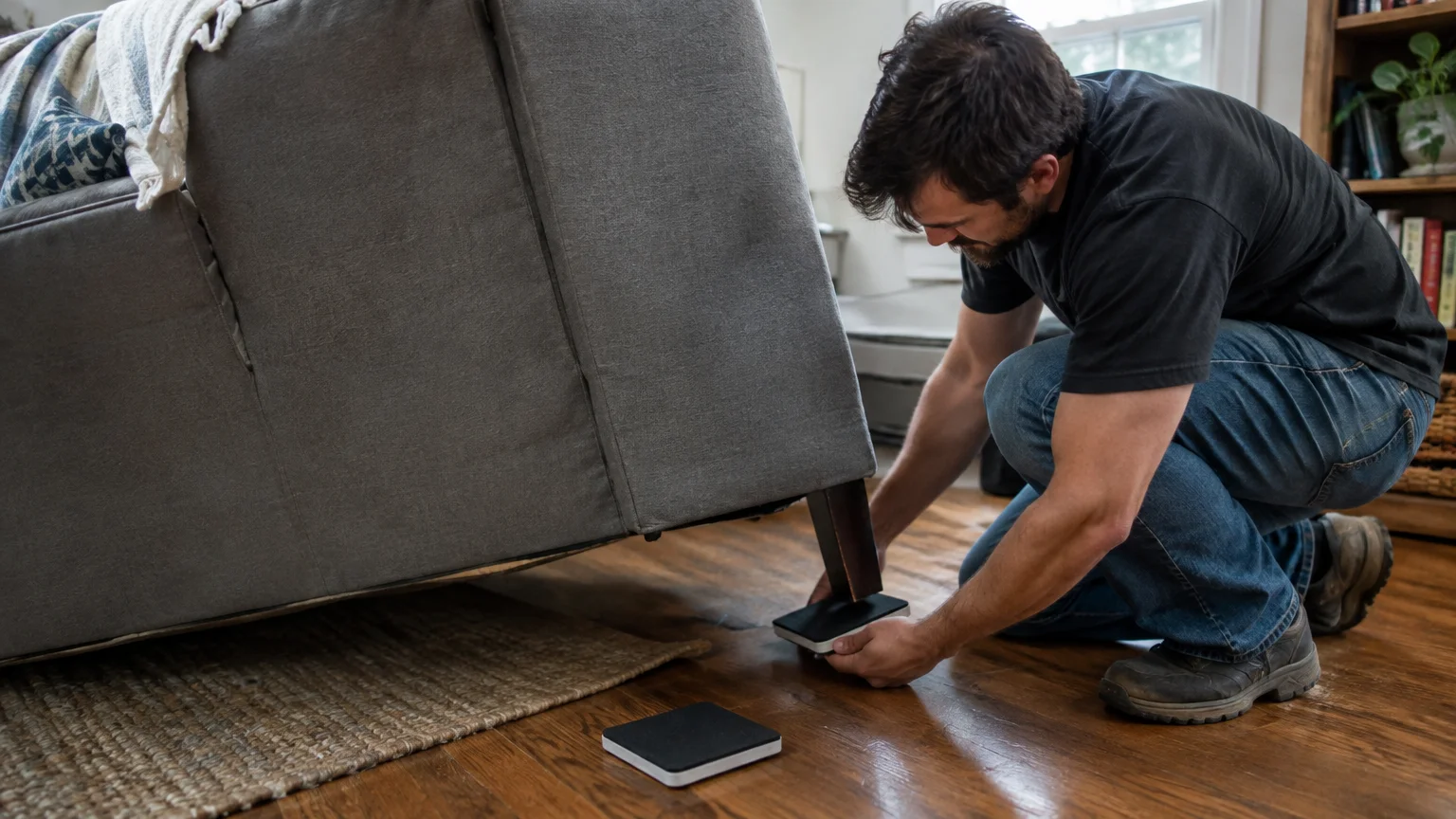
Tilt one side of the couch only as much as needed to place a slider. Use a solid frame point, not a weak foot or thin panel. Repeat on the other side. Check that each slider faces the same way and lies flat.
Push near the lower frame. This keeps the couch steady and lowers the chance of a tip. Move a short distance, then stop and check the sliders. If one shifts, reset it before moving again.
Do not move a couch across broken tile, loose rugs, or uneven ground with small sliders. They may catch and cause a sudden stop. Use a dolly or ask for help when the floor does not allow smooth movement.
Move gradually while maintaining control
Plan each push before you begin. Keep your feet apart and bend your knees a little. Push with your legs and body, not with a rounded back. Do not twist while holding the couch.
Move toward the open side of the room. Do not push the couch into a corner where it cannot turn. If the couch must rotate, stop and clear space around every side first.
Never rush to catch a couch that starts to tip. Step away if that is safer. A damaged couch may be repaired, but a back or shoulder injury can last much longer.
How Do You Get a Couch Through a Narrow Door?
A couch may fit through a narrow door when it is tilted, turned, or placed on its side. You must protect the door, check the couch shape, and keep a clear way out. If it does not fit after careful measuring, do not force it.
Tilt, rotate, and angle the couch safely
Remove the door from its hinges only when you know how to do that safely. Protect the frame with blankets. Stand the couch on its end or side if its frame allows it. Put pressure on strong frame parts, not arms or cushions.
Angle the top of the couch through the doorway first. Then turn the base as the couch passes the frame. This can work when the couch is longer than the doorway is wide. You need enough room on both sides to guide the turn.
Check ceilings, lights, and nearby walls. A couch that clears the doorway may still hit a ceiling corner. Move slowly and stop whenever the frame catches.
What to do when the couch does not fit
Do not force a couch through a doorway. Forcing it can damage the couch, trim, drywall, or hinges. Check the measurements again and look for removable legs, feet, backs, or doors that limit the opening.
Some couches cannot turn because of their frame shape. A large sectional may need to separate into sections. A professional mover can check the route and use the right tools when the couch is too large for a safe solo move.
If the couch cannot leave through the planned route, another door or window may work. Trained workers should handle options that involve height, glass, lifting gear, or a narrow outside landing.
How Do You Move a Couch Downstairs by Yourself?
Moving a couch downstairs alone is usually not safe. The couch can gain speed, block your view, or crush fingers against steps and walls. Stairs also leave little room to recover from a slip.
Set up a controlled descent
A controlled descent needs more than strength. The couch must be supported, the stairs must be clear, and you need a safe position. A hand truck with proper straps may help in some cases, but it still needs control from above and below.
Never carry a couch down stairs while walking backward without a clear view. Do not let the couch slide freely on blankets. A sliding couch can damage the steps and become too hard to stop.
A heavy couch needs two or more trained movers for a safer descent. They need clear commands and a safe place to rest the couch. Professional furniture movers use tools suited to stairs and heavy furniture.
Avoid common stairway and landing hazards
Remove loose rugs, decorations, and clutter from every step. Check for wet spots and poor light. Protect walls and railings, but do not cover steps with blankets that could cause a slip.
Landings are common trouble spots. The couch may need to turn while part of it remains on the stairs. Measure the landing before starting. If there is not enough space to pivot, the route may be unsafe.
Stop if you feel strain, lose your grip, or cannot see the next step. Stopping early is safer than trying to finish a move that has become unstable.
How Do You Load a Couch Into a Truck Without Help?
Loading a couch into a truck alone needs a stable ramp or liftgate, a clear loading area, and a way to secure the couch. Park the truck on firm, level ground. Do not lift a heavy couch from the ground into a truck by hand.
Use a ramp or liftgate safely
A ramp must match the truck and support the full load. It should sit flat and lock in place. It also needs enough width for the dolly. Keep the ramp dry and clear. A steep or shifting ramp can cause the couch and dolly to roll back.
A liftgate can reduce the need to raise the couch. Center the couch on the platform and keep it steady while the platform moves. Follow the equipment directions and stay away from pinch points.
A second person is strongly advised for ramps and liftgates. If no help is available, Loading & Unloading Help may provide the hands needed for a safer move without arranging a full move.
Secure the couch for transport
Place the couch where it cannot slide into other items. Keep it upright when the maker allows that position. Some couches should stay on their base because side storage can put stress on the frame.
Use straps on proper anchor points. Do not tighten straps across fragile arms or cushions. Put moving blankets between the couch and hard surfaces. Leave room for air around fabric when moisture may collect.
Check the load after the truck starts moving and again after the first stop. A strap can loosen as the load settles. The couch should not shift, block the driver’s view, or press against glass or sharp objects.
What Mistakes Should You Avoid When Moving a Couch?
The most common mistakes are poor measuring, rushed lifting, weak handholds, and an unclear route. A couch may look simple but hide a heavy frame or poor balance. Careful planning matters more than raw strength.
Lifting with poor body mechanics
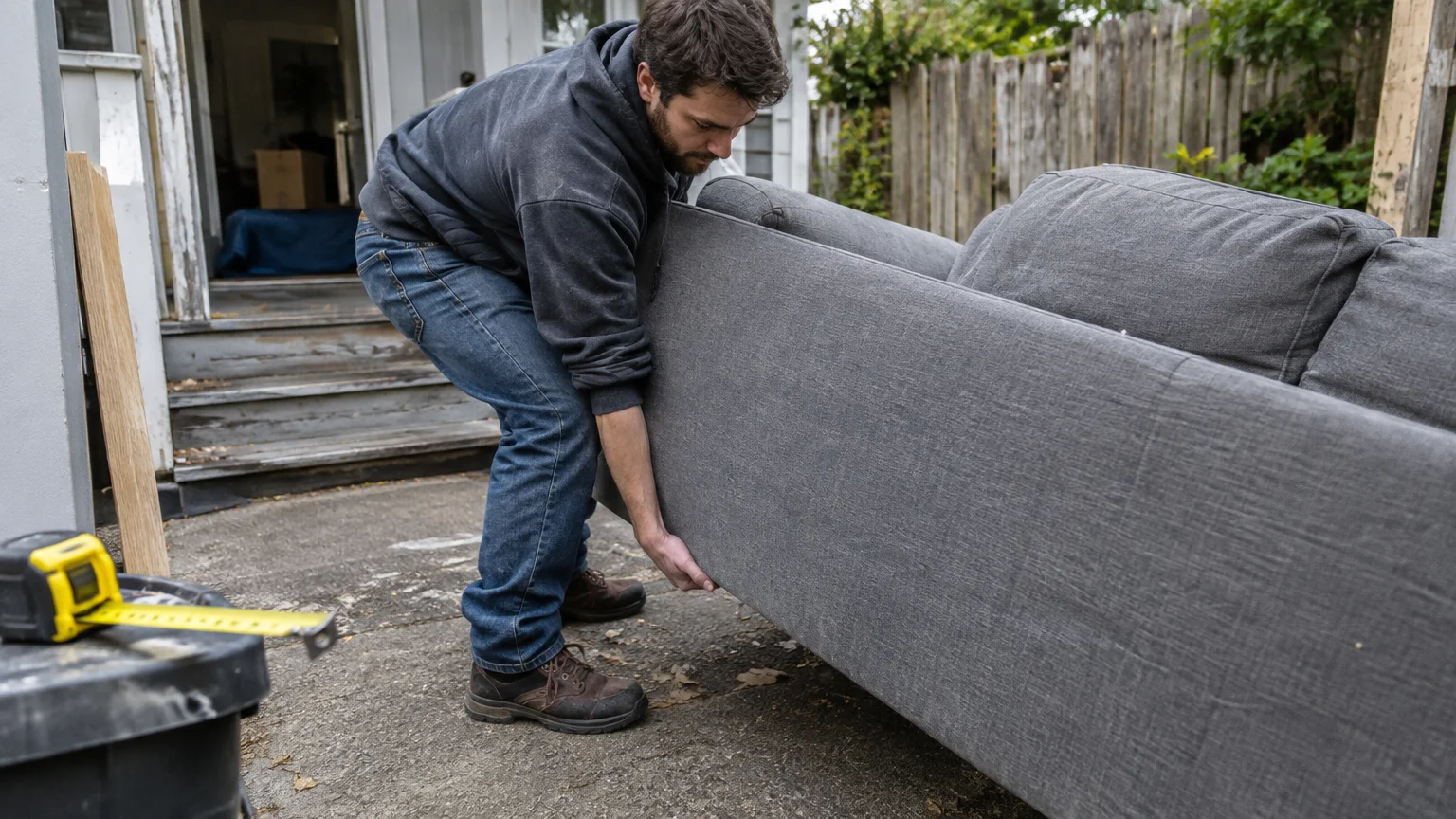
Do not bend from the waist and pull with your back. Keep the load close when lifting, bend your knees, and avoid twisting. Do not lift above shoulder height. If you cannot hold the couch close, it may be too large for one person.
Do not use couch arms, loose cushions, or recliner parts as handles. These parts can break or pull away from the frame. Grip a solid frame area or use equipment made for moving furniture.
Take breaks before tiredness causes poor control. Tired movers often rush turns and miss obstacles. A short pause can prevent a fall, wall impact, or damaged couch.
Ignoring obstacles, damage risks, and changing conditions
Do not assume a couch will fit because another couch fit before. Designs vary by brand and model. Measure the actual couch and route every time.
Avoid moving across wet floors or icy walks. Protect floors from grit that can scratch wood or tile. Keep pets and children away from the route until the couch is in place.
Do not remove a door, railing, or window without knowing what the job involves. Structural parts, glass, and outside edges can create serious risks. When the plan needs special tools or work at height, professional help is safer.
When Should You Hire Professional Movers for a Couch?
Hire professional movers when the couch is heavy, the route has stairs, the door is narrow, or the item cannot be controlled alone. Professional help also makes sense when the couch is valuable, delicate, oversized, or part of a larger home or office move.
Signs the job is beyond a safe DIY move
The job is likely beyond a safe DIY move when any of these conditions apply:
- The couch blocks your view while you carry or guide it.
- The route includes stairs, tight landings, or uneven outdoor ground.
- The couch has a sleeper frame, recliner parts, or a large solid frame.
- You cannot lift, turn, or stop the couch with control.
- The couch must pass through a narrow opening with little room to pivot.
- The move needs a ramp, liftgate, window, or special lifting equipment.
Ask for help after an injury, during pregnancy, or when balance and grip are limited. There is no good reason to start a move that may cause harm.
How professional help reduces damage and injury risks
Professional movers plan the route, bring suitable equipment, and use clear movements. They can protect floors, walls, doors, and upholstery. They also know when a couch should be separated, tilted, or carried by more than one person.
Harrisburg Movers provides moving help for homes and offices in the Harrisburg area. This includes places such as Midtown, Allison Hill, Mechanicsburg, Middletown, Marysville, and Hummelstown. Local Movers may help with a full move, while Furniture Movers can focus on one large item or a hard room change.
Frequently Asked Questions
Can one person move a couch through a doorway?
One person may move a small couch through a wide doorway when the floor is level and the path is clear. The couch must be easy to control while tilted. A heavy sofa, narrow opening, or tight turn can make the job unsafe. Measuring first is more reliable than guessing.
Should a couch be moved upright or on its side?
The best position depends on the couch frame, doorway, and route. Many couches can tilt onto one side for a doorway turn, but some frames can bend or become unstable. Check the maker’s guidance and use strong frame points instead of arms or cushions.
How can someone move a couch without scratching the floor?
Use clean furniture sliders or a properly supported dolly. Remove grit from the floor first, since small stones can scratch wood and tile. Add floor runners along the route. Never drag an unprotected couch, and stop if a slider catches or shifts.
Is it safe to move a sleeper sofa alone?
A sleeper sofa is often unsafe to move alone because its metal bed frame adds weight and may shift. Close and secure the bed before moving it. Ask for help when the sofa includes stairs, a ramp, a narrow door, or a long carry.
What should someone do if the couch will not fit through the door?
Stop and check the measurements instead of forcing the couch. Remove allowed parts such as legs or a detachable back. Try another route only after checking its full path. If the couch still cannot fit, a professional mover can check whether separation or special equipment is needed.
Key Takeaways
- Measure the couch, doors, halls, stairs, and turns before moving it.
- Use sliders or a dolly to reduce lifting across level floors.
- Remove cushions and detachable parts, then protect the couch and home.
- Do not force a couch through a doorway or move a heavy couch downstairs alone.
- Contact Harrisburg Movers when the couch is too heavy, large, or hard to control.
Conclusion
Learning how to move a couch by yourself starts with honest planning. A small couch on a clear, level route may be manageable with sliders and careful steps. Heavy couches, stairs, narrow turns, and truck ramps create risks that strength alone cannot solve.
A safe move protects the person, couch, and home. Harrisburg Movers can help residents plan difficult furniture moves with the right level of support.
If you are unsure about the route or the couch’s weight, get advice before moving it. Contact us today to request a quote from Harrisburg Movers and discuss the safest way to handle the job.